
Expanding the “Science of Reading”: From Phonics to Knowledge, Writing, and Language
Over the past few years, the “science of reading” movement has made enormous gains in U.S. classrooms. Yet a new wave of scholarship and practice is pushing the field to widen its lens from a narrow focus on decoding to a full “science of literacy” that includes writing, language, and background knowledge. Organizations such as ASCD and Education Week have helped educators move beyond phonics-only thinking by emphasizing that comprehension depends on the interplay of multiple literacies (ASCD, 2025).
From Reading to the Science of Reading + Writing + Knowledge
The consensus is clear: reading and writing must be taught together. The National Council of Teachers of English argues that writing instruction deepens comprehension by supporting students’ understanding of syntax and vocabulary (NCTE, 2024). In classrooms, this shift translates to short, integrated routines often called “sentence work," where teachers guide students through combining, expanding, or imitating sentences to strengthen both fluency and comprehension (Graham et al., 2023).
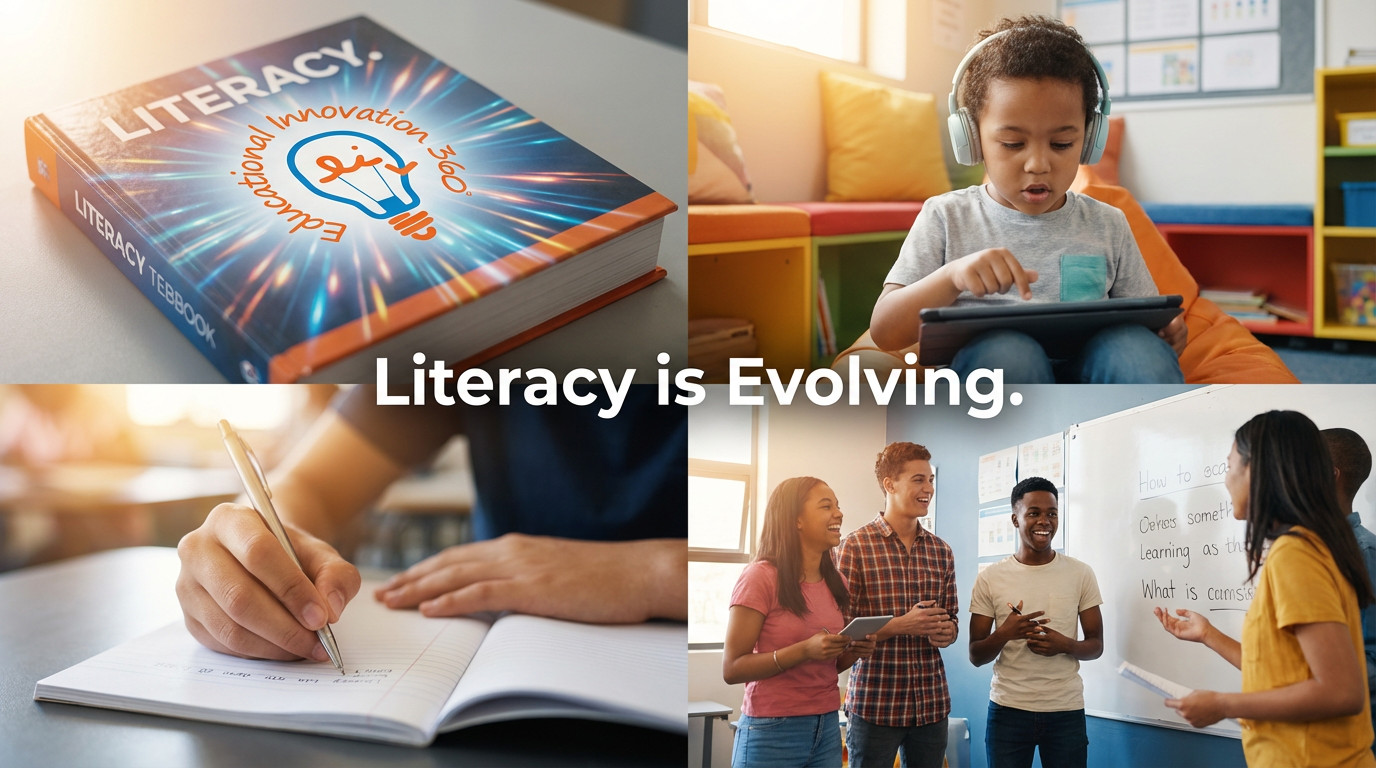
Ei360: The Future of Literacy
For teachers, adding 2–7 minutes of daily sentence-level practice within reading lessons can strengthen syntax awareness and vocabulary retention.
For instructional coaches, short coaching cycles can focus on coherence, making sure reading and writing are not taught as isolated skills but as complementary processes.
For principals, protecting time for cross-curricular literacy is key: students should be reading and writing in science, history, and even mathematics.
How Are We Designing the Modern Reading Block?
Districts continue to experiment with what an effective reading block looks like in 2026. Research doesn’t prescribe a single structure (Education Week, 2025), but high-performing schools are finding success through predictable routines that integrate foundational skills, vocabulary, and writing.
A common framework includes:
Phonics/word work (10–15 minutes)
Knowledge and vocabulary building (15–20 minutes)
Reading and writing integration (20–30 minutes)
Instructional coaches increasingly use rapid “block audits” to check for balance, ensuring decoding, fluency, comprehension, and written response are all present, not siloed. Principals, meanwhile, look for explicit modeling, cumulative review, and writing tied directly to reading texts.
Secondary Literacy: Systemic Challenge, Systemic Response
Middle and high school teachers face a sobering reality: many students enter secondary grades without fully developed reading fluency. The “reading rope” model, long central to early literacy, is being adapted for adolescents to identify whether comprehension breakdowns stem from word recognition or language understanding (Moats & Dakin, 2024).
Effective secondary strategies include:
Tier 2 literacy menus: fluency routines, morphological analysis, and sentence-combining work.
Diagnostic reading checks that quickly pinpoint skill gaps.
Protected intervention time, scheduled as reliably as math or science classes.
Policy and Professional Learning: Tightening the Evidence Loop
At the state level, policymakers are enacting legislation requiring evidence-based curricula and teacher training. Pennsylvania and other states now mandate multi-year implementation plans to ensure fidelity to research-backed approaches (Chalkbeat, 2025). For school leaders, this means partnering with Educational Innovation 360 to treat literacy improvement as a structured change-management initiative, complete with training, coaching, and communication plans. Teachers will see increasing expectations for progress monitoring and documented interventions, while coaches are focusing on simplifying data cycles to avoid burnout.
How Do We Turn AI Into a True Literacy Workflow Partner?
A significant 2026 trend is the integration of artificial intelligence into literacy instruction. ASCD and ISTE have signaled that AI’s role is shifting from novelty to workflow optimization, especially in writing feedback, differentiation, and teacher coaching (ISTE, 2026).
Potential classroom uses include:
AI-generated revision prompts aligned with rubrics.
Automated feedback that highlights strengths and growth areas before teacher conferences.
Tools to scaffold reading comprehension and vocabulary practice.
School leaders, however, must create guardrails, ensuring transparency, data security, and equity while maintaining consistent expectations.
Monday Morning Moves
Teachers: Add one short writing move within your reading block (e.g., a summary or evidence-based response).
Coaches: Launch a two-week micro-cycle, co-plan, model, and debrief with student work as evidence.
Principals: Focus walkthroughs on three “look-fors”: explicit instruction, cumulative review, and writing-from-reading integration.
Literacy is no longer a private initiative; it’s becoming a core operating system for schools. Sustained improvement depends not just on new curricula, but on coherent systems that align adult learning, classroom practice, and student needs.
References
ASCD. (2025). Broadening the science of reading conversation: Writing, knowledge, and comprehension. Association for Supervision and Curriculum Development.
Chalkbeat. (2025). States move to mandate evidence-based reading programs and teacher training. https://www.chalkbeat.org/
Education Week. (2025). Districts redefine the reading block: Balancing phonics, content, and writing. Editorial Projects in Education.
Graham, S., Harris, K. R., & Santangelo, T. (2023). Writing to improve reading comprehension: Evidence and strategies. Educational Psychologist, 58(2), 135–150.
International Society for Technology in Education (ISTE). (2026). AI in literacy education: Building safe and effective feedback systems. ISTE Press.
Moats, L. C., & Dakin, K. (2024). The reading rope revisited: Applying the science of reading in secondary classrooms. Reading Research Quarterly, 59(1), 23–41.
National Council of Teachers of English (NCTE). (2024). Integrating writing and reading instruction in K–12 classrooms: Position statement. https://ncte.org/