
How Principals Can Use AI and Micro-Coaching to Support Teachers and Strengthen Retention
Teacher burnout and turnover continue to challenge K-12 schools nationwide. Educators report rising workloads, limited planning time, and increasing expectations that often outpace available support. These pressures directly influence teacher satisfaction and long-term retention. School and district leaders are seeking practical, research-aligned strategies that not only support teachers but also build sustainable systems that elevate school culture. Recent evidence suggests that strategic leadership practices, consistent coaching structures, and emerging AI tools can significantly reduce the pressures teachers face (EAB, 2023).
This blog highlights how principals can integrate micro-coaching and artificial intelligence to create supportive work environments and improve teacher retention. These approaches work best when paired with strong leadership, ongoing communication, and a commitment to professional growth for instructional staff.
Understanding the Problem
Burnout reflects more than fatigue. It includes emotional exhaustion, workload overload, and the feeling of working in isolation without sustained support. When these pressures go unaddressed, teacher turnover increases and student achievement suffers. Leaders play an essential role in shaping the conditions that allow teachers to feel valued, supported, and connected. Research underscores that effective school leadership can offset many of the factors that contribute to burnout (EAB, 2023). Supportive systems and structures matter.
Micro-Coaching as a Practical Solution
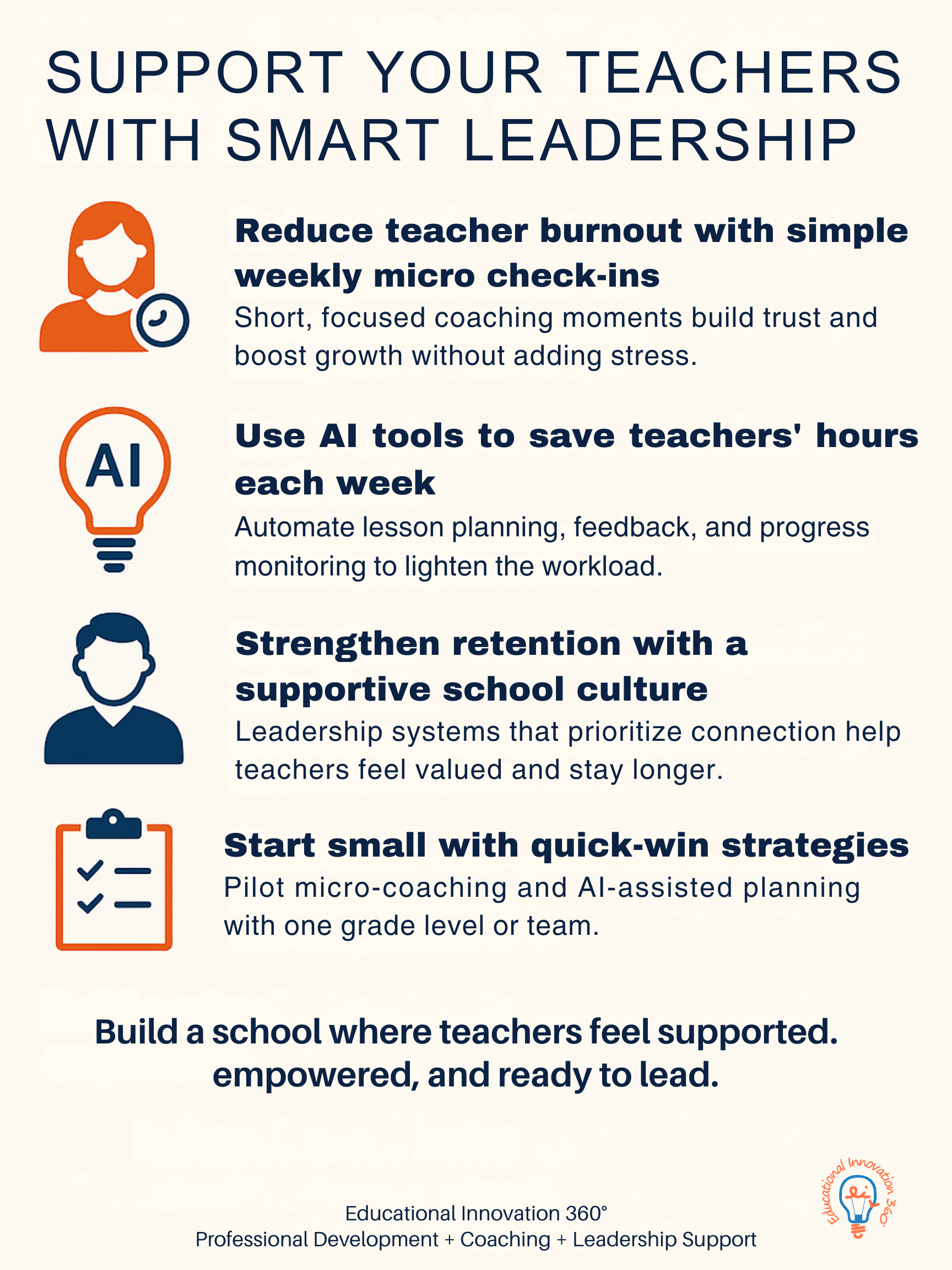
Ei360: Support teachers with Smart Leadership
Micro-coaching refers to brief, targeted coaching moments that offer consistent feedback without overwhelming teachers or leaders. Instead of lengthy observations or infrequent meetings, the goal is to create short, meaningful support cycles that build trust and spark professional reflection. This approach is especially effective because it reduces the cognitive load on teachers and provides timely, manageable guidance that supports ongoing improvement.
Examples of micro-coaching practices include:
Five to ten-minute classroom check-ins
Short reflective questions sent weekly
Quick feedback moments after a lesson
Mini-goals aligned with teacher needs
These strategies help teachers feel seen, supported, and connected to leadership. They also create a culture of continuous learning and improvement.
How AI Reduces Workload and Enhances Instructional Support
Artificial intelligence is transforming workflows in K-12 education by helping teachers save time on planning, data analysis, and administrative tasks. When used responsibly, AI becomes a supportive tool rather than an additional burden. Teachers can gain hours back each week, which reduces stress and allows them to focus on students.
AI can support teachers by:
Streamlining lesson and unit planning
Analyzing formative assessment data
Offering suggestions for instructional strategies
Drafting communication, feedback, and resources
Supporting differentiation and inclusive lesson planning
When leaders introduce AI tools with proper guidance and guardrails, teachers experience more autonomy, more efficiency, and more time for meaningful instructional practices.
A Practical Scenario for Implementation
Consider a school where teachers are reporting exhaustion and inconsistent instructional support. The principal introduces two anchor strategies: micro-coaching cycles and AI-assisted planning.
In this scenario:
Teachers receive quick feedback weekly.
Leaders use AI tools to help teachers analyze assessment data.
Planning time becomes more productive, reducing after-hours work.
Small goals drive consistent growth instead of overwhelming initiatives.
Within months, teachers report feeling more supported, more confident in their instructional decision-making, and more connected to leadership. These small changes create a ripple effect across the school: improved morale, greater instructional consistency, and increased student engagement.
Action Steps for Principals
Principals interested in adopting these strategies can begin by implementing a structured but simple approach:
Launch micro-coaching routines
Use short, consistent check-ins rather than long, infrequent meetings.Introduce AI tools strategically
Start with lesson planning, progress monitoring, or feedback tools that reduce workload.Create a culture of support
Encourage reflection, conversation, and open communication between teachers and leaders.Address resistance early
Offer training, explain the purpose, and build trust before expecting full adoption.Start small
Pilot with a few teachers or one grade level to build early success stories.
The goal is not to overwhelm teachers with new systems but to support them through intentional, achievable steps that make their daily work easier.
Moving Forward
Teacher burnout and retention will continue to challenge schools unless leaders take meaningful steps to support educators. Micro-coaching and AI are not quick fixes, but together they create a forward-thinking approach that combines relational leadership with modern tools. Principals who build supportive systems set the stage for stronger school culture, more effective instruction, and long-term teacher stability.
Educational Innovation 360° partners with schools and districts to implement these strategies in ways that are practical, sustainable, and aligned with each school’s unique context. To learn more, connect with our team or schedule a consultation.
References
EAB. (2023). Building systems for principal success: Three key lessons for district leadership. https://eab.com/resources/blog/k-12-education-blog/building-systems-for-principal-success-3-key-lessons-for-district-leadership/
YouTube. (2023). Leadership and coaching practices in education [Video]. https://www.youtube.com/watch?v=4x9KG9ND2As